 |
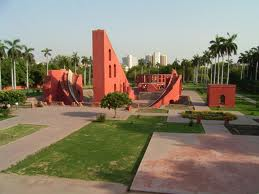
| The Jantar Mantar is an architectural observatory |
 |
| Jantar Mantar at Delhi |
I was
sixteen when one Delhi winter morning, my friends talked me into going to the
Jantar Mantar. On a vague impulse, we raced up a structure in the architectural
observatory. The lack of a parapet brought on the usual tingling in my palms
and feet, but it was on the way down that I took in the steep and narrow steps;
I was seized by an attack of vertigo. Resting my slippery left hand on the wall,
I sat my way down, taking care not to look at the amazed faces of my friends, or
the sheer drop on the right. I had been so busy chalking the route back home
that I had forgotten my immediate problem of heights.
 When I see
the crowds on television, protesting at Jantar Mantar in the aftermath of the
unbearable atrocity of 16th December 2012, I am reminded again of
how I was always afraid to soar high or venture far in Delhi. Every independent
outing during my girl hood was attended by a detailed retreat strategy.
When I see
the crowds on television, protesting at Jantar Mantar in the aftermath of the
unbearable atrocity of 16th December 2012, I am reminded again of
how I was always afraid to soar high or venture far in Delhi. Every independent
outing during my girl hood was attended by a detailed retreat strategy.
So getting
back from Jantar Mantar—we would get off at the main INA Colony bus stop, where
one of my mates, lucky girl, lived. I had choices. I could take a bus home,
with the usual problem of harassment on the bus and the bus stop. I hated
buses, even before I was groped, which was before I knew a prepubescent school
child could be squeezed by a clean cut Zaheer Abbas look-alike, and that a
busload of men, old and young, could find this funny. I did two things that day
– I cut the side seams of my kurta higher, so they would be baggier, and I
decided I would not board a Delhi bus alone. But we were not rich, car rides
were out of question.
 |
| Primal genocide - Khandava Massacre |
  |
| Delhi massacres - Timur, Nadir Shah |
I have
since trekked in the Sahyadri Ghats of Maharashtra and the Himalayan foothills
of Meghalaya, I have sung in college bands and worked nights as an Investment
Banker; I have taken buses, trains, cabs and auto rickshaws, and walked, in the
wee hours of the morning in all these parts of India; I have travelled the
length and breadth of my country. Six months ago, I got onto the road in Mumbai
to stand before a public bus coming down at my taxi, so we could get the leeway
needed to make the impossible about turn my young cabbie had embarked on before
he froze mid road ( ‘I hate this’, he had cried. My heart went out to him and
we chatted the rest of the way. He was from Gorakhpur, looked no more than
seventeen. I am not sure if I would reach out like that again.)
I hope I am not a coward. But I have not gone
back to Delhi.
I have not
been to Delhi for fifteen years, though I miss her so, her brash energy and her
old history, her emporia of bargains and her wistful weather beaten beauty. But
I dare not ride a bus in the city I grew up in, or take a walk to enjoy the
best street side food in the country, or go off to explore any of the innumerable
ruins redolent with untold stories that dot the city, not without an escort and
the trappings of privilege–chauffeur driven cars, chalked out itineraries,
experienced guides.
And so I salute the Delhi girls who by choice or circumstance use public transport for their daily commute. Some are born courageous, some have courage thrust on them, but they are all brave Delhi women.
 |
| I passed Darya Khan's tomb everyday, never thinking to explore it |
 |
| Delhi chat |
And so I salute the Delhi girls who by choice or circumstance use public transport for their daily commute. Some are born courageous, some have courage thrust on them, but they are all brave Delhi women.


